



19 Dec
Peak Season in Logistics: Understand the Challenges and How to Anticipate Them
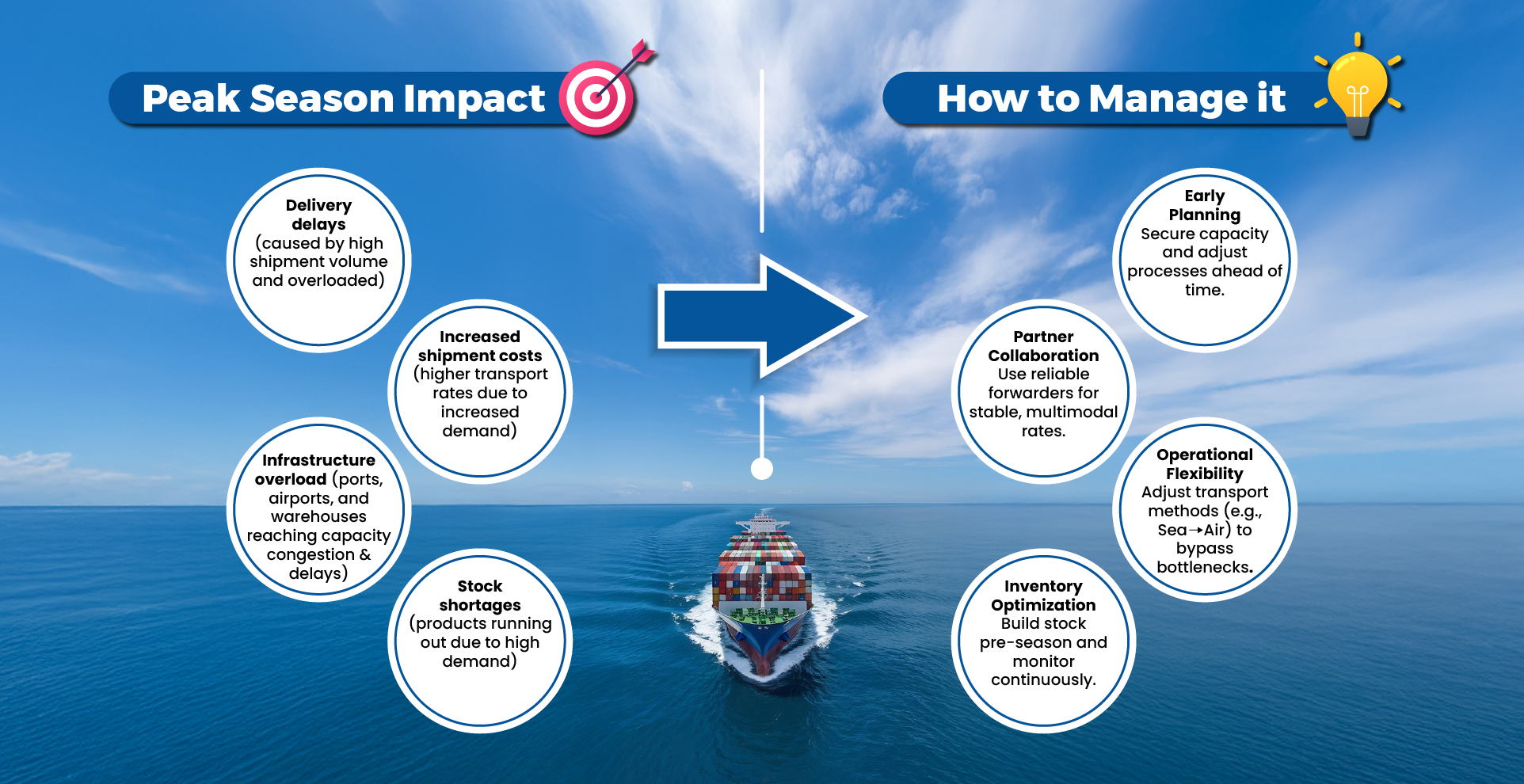
In the logistics and supply chain industry, peak season is often seen as a period full of opportunities. Demand increases, shipping volumes surge, and trade activities move faster than usual. However, without thorough preparation, peak season can turn into a major challenge, causing delivery delays, capacity limitations, and increased logistics costs.
Peak season is a period when there is a significant increase in demand for logistics and shipping services. This surge is generally triggered by holidays, shopping seasons, major promotions, or changes in consumer behavior that drive demand for goods above normal conditions. For companies that ship goods, peak season requires more complex resource management and much more thorough planning to maintain service quality.
Read also: Understanding Incoterms 2020: Important Rules in Export-Import
The peak season phenomenon is highly relevant for the e-commerce, retail distribution, and export-import sectors, where timely delivery has a direct impact on customer satisfaction and business continuity.
Understanding when peak season occurs and what challenges it entails is the first step to avoiding operational disruptions.
Here are the seven main peak logistics periods that businesses need to anticipate.
1. Year-End Holidays (December)
The Christmas and New Year period is one of the busiest times in global logistics. Consumer demand increases sharply, while companies race to replenish stock before year-end closures.
As a result, shipping volumes surge, ports experience congestion, and transit times are often longer than usual.
2. Chinese New Year (February 17–23)
Chinese New Year has a significant impact on global trade due to China's central role in the manufacturing sector. Production slowdowns and factory closures typically begin several weeks before the holiday and can last until early March.
This situation leads to production delays, reduced shipping capacity, and limited vessel space on major export routes.
Read also: Freight Forwarder Duties and Services: A Complete Guide to Export-Import
3. Ramadan & Eid al-Fitr (March)
During the month of Ramadan and leading up to Eid al-Fitr, demand for consumer goods increases significantly, especially for food, beverages, and retail products.
On the other hand, transportation capacity tends to be limited and operating hours in some regions are reduced, leading to slower overall logistics performance.
4. Eid al-Adha (May)
Eid al-Adha drives an increase in demand for meat and perishable products. This leads to high utilization of refrigerated containers (reefers), which are limited in number.
The combination of national holidays and the need for specialized equipment can slow down logistics processes and increase shipping costs.
5. Summer Holidays & Back to School (July–August)
In Europe and North America, summer holidays and preparations for the new school year trigger a seasonal surge in demand. Retailers increase stock for clothing, school supplies, and other seasonal needs.
This surge places significant pressure on shipping capacity, warehousing, and land transportation.
6. Golden Week (October 1–7)
Golden Week in China leads to widespread factory closures, resulting in a surge of shipments before the holiday and an accumulation of goods after the holiday ends.
During this period, shipping rates often increase due to limited capacity, while delivery delays become common.
7. Black Friday & Cyber Monday (November 27–30)
As one of the largest peak seasons in global logistics, Black Friday and Cyber Monday drive a massive surge in the retail and e-commerce sectors.
Sudden increases in orders often create bottlenecks at ports, warehouses, and last-mile delivery services, leading to a higher risk of delays.
Read also: What is HS Code: How to Find Out HS Code
How to Anticipate Peak Season Logistics Challenges
Peak season is not a surprise; this period can be predicted and managed with proper planning. Companies that plan shipments earlier, secure capacity in advance, and collaborate with experienced logistics partners will be better prepared to maintain smooth operations.
By understanding these seven main peak logistics periods, exporters and importers can anticipate risks, optimize planning, and avoid damaging disruptions, so that peak season no longer becomes a nightmare, but rather a strategic opportunity for business growth.
source: https://www.savinodelbene.com/peak-season-what-it-is-when-it-occurs-consequences-how-to-manage-it/
